Commercial vs. Residential Plumbing: What Really Changes
If you’re comparing commercial plumbing vs residential plumbing, the short version is simple: both move water in and waste out, but everything around that job changes once a building serves more people, more fixtures, and stricter rules. That difference matters a lot when you’re dealing with a house in Lakewood Ranch, a restaurant near downtown Sarasota, or a multi-unit property with shared lines and very little room for error.
What commercial plumbing vs residential plumbing really means
Residential plumbing is the plumbing inside and around places you live, usually single-family homes, condos, townhomes, and small residential units. It covers the familiar stuff: sinks, toilets, showers, water heaters, kitchen drains, hose bibs, and the pipes feeding and draining them.
Commercial plumbing serves buildings used for business, public access, or larger shared occupancy. Think offices, restaurants, retail spaces, medical offices, schools, apartment complexes, and mixed-use properties. The systems still do the same basic job, but the design, service demands, code requirements, and repair process are on a different level.
Here’s the thing: the real difference is not just “commercial buildings are bigger.” A small café can have plumbing demands that are tougher than a much larger house. A commercial system has to handle more people, more wear, more fixture types, more health and safety rules, and more pressure to stay up and running. If your building depends on open restrooms, hot water, grease management, or code compliance to stay operational, that changes the plumbing approach right away.
The biggest difference: scale changes everything
Scale sounds like a boring word until a small leak turns into a problem across multiple restrooms, a kitchen, and a tenant suite. In residential plumbing, the system usually serves one household with fairly predictable daily use. In commercial plumbing, use can spike hard, run all day, and involve dozens or hundreds of people.
That affects everything. Pipe sizing changes. Water demand changes. Drain loads change. Access gets more complicated. Repair windows get tighter. A home plumbing issue is often about restoring comfort. A commercial plumbing issue is often about preventing downtime, code trouble, and lost revenue.
Commercial plumbing is more complex. Not in an abstract way, but in ways you notice fast when something breaks.
How usage loads change the system
A home may have two or three bathrooms, a kitchen, a laundry room, and a water heater that serves a single family. Even with heavy use, there are natural pauses. People leave for work, sleep at night, and use fixtures in fairly normal patterns.
Commercial buildings don’t get those breaks. Office restrooms can see steady use all day. Restaurants put constant strain on sinks, drains, dishwashing stations, and grease-handling systems. Retail stores need reliable public restrooms. Medical buildings often have strict sanitation demands and more hand-washing stations than a house could ever need. Multifamily properties blur the line, because each unit may feel residential, but shared plumbing infrastructure behaves more like a commercial system.
More usage means faster wear. Seals fail sooner. Valves cycle more often. Drain lines collect buildup faster. Water heaters work harder. Small issues become urgent sooner, because more people are affected and the system has less margin for failure.
Why bigger systems are harder to trace and fix
Troubleshooting a home plumbing problem is often fairly direct. A clogged bathroom sink usually leads to one drain line. A toilet backup often stays tied to one bathroom or one branch line. Access is not always easy, but the map is usually manageable.
Commercial plumbing is more like tracing one bad wire in a crowded control room. Pipe runs are longer. Systems may cross ceilings, walls, utility spaces, and multiple floors. There can be separate shutoff zones, multiple cleanouts, dedicated equipment rooms, and a mix of old and new plumbing from different remodels.
That matters because diagnosis takes longer. The leak you see in one place may have started 40 feet away. A drain issue in one restroom may connect to a larger branch serving other spaces. Even shutting the water off can require more planning, because you may not want to interrupt half the building to fix one valve.
How the plumbing systems themselves differ
The physical systems are built differently because the job is different. Residential plumbing is usually designed around comfort, convenience, and routine household use. Commercial plumbing is designed around capacity, durability, access, compliance, and uninterrupted function.
Once you look at the actual equipment, the gap gets obvious.
Fixtures, water heaters, and specialized equipment
In a house, you usually see standard toilets, faucets, tubs, showers, dishwashers, washing machine hookups, and maybe irrigation or an outdoor kitchen. The water heater is sized for household demand, and most fixtures are familiar off-the-shelf residential products.
Commercial systems often include equipment you won’t see in a typical home. Flushometer toilets use direct water pressure instead of a tank. Booster pumps help maintain pressure in larger buildings. Backflow preventers protect the water supply from contamination. Restaurants may need grease traps or interceptors to keep fats, oils, and grease out of the sewer system. Larger buildings may use bigger water heaters, multiple heaters, recirculation systems, or dedicated service lines for separate tenant areas.
That extra equipment adds service needs. It also changes the skill set required to diagnose and repair problems correctly.
Drainage and waste systems
Drainage is where the difference gets very real, very fast. Residential drains usually deal with normal household wastewater from bathrooms, kitchens, and laundry. A clog is annoying, messy, and disruptive, but it often affects one area first.
Commercial drains have to handle higher volumes, heavier solids, grease, cleaning chemicals, and more continuous use. Cleanout access becomes more important because the system needs practical service points. Drain sizing can be larger. Waste lines may serve multiple restrooms or tenant spaces. In food-service settings, grease management becomes part of the plumbing conversation because blocked grease lines can shut down operations in a hurry.
A clogged kitchen drain at home can ruin your evening. A clogged commercial drain can close your doors before lunch. That’s the real difference.
Pipe materials and build standards
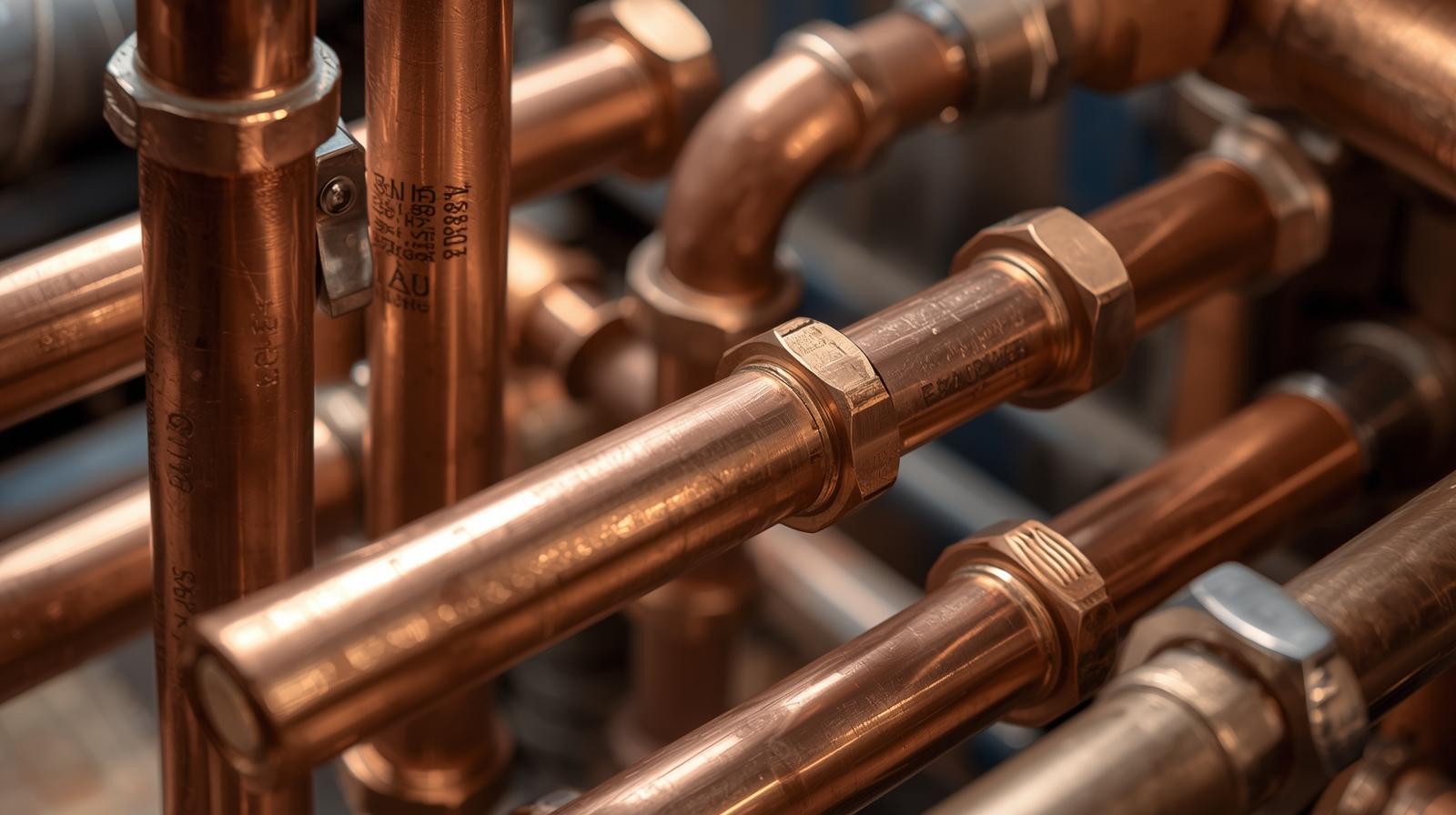
Residential properties often use materials like copper, PEX, PVC, or ABS, depending on the age of the home, local code, and the part of the system involved. The focus is usually on reliability, cost, and fit for normal household demand.
Commercial systems may use some of the same materials, but the selection and installation standards are often shaped by occupancy, load, fire rating concerns, accessibility, durability, and local code requirements. Larger systems also have more supports, more joints, more transitions, and more planning behind pressure balance and waste flow.
You don’t need to memorize material types to understand the practical point: commercial plumbing is built for heavier use and tighter oversight, and that changes how repairs and upgrades are done.
Codes, permits, and inspections get more serious in commercial work
Both residential and commercial plumbing have to meet code. But commercial work usually brings more layers with it: more paperwork, more inspections, more coordination, and less room for informal fixes.
In a house, replacing a fixture or water heater may be fairly straightforward, depending on the job and local rules. In a commercial setting, that same basic change can trigger permit requirements, inspection scheduling, access coordination, and compliance checks tied to the building’s use.
Why commercial code compliance is more involved
Commercial properties are tied to occupancy, public health, and life safety in ways homes usually aren’t. Restrooms may need to meet accessibility requirements under ADA-related standards. Backflow protection may be required to protect potable water. Restaurants and medical spaces often face health-related requirements that raise the stakes for every plumbing detail.
The catch is that passing inspection is only part of it. The bigger goal is keeping the building safe, legal, and open. If a plumbing issue creates a sanitation problem, cross-connection risk, or restroom outage, the cost is not just the repair. It’s the disruption that comes with it.
What this means for repairs and remodels
In a home, swapping a toilet, replacing a sink, or moving a water line during a remodel is usually a contained project. In a commercial property, even a “simple” change can involve permits, tenant coordination, shutoff planning, and inspection timing.
If your building is occupied, repairs may need to happen after hours. If your business can’t shut down during peak time, the plumbing schedule has to work around operations. If multiple suites or residents share one system, communication matters almost as much as the repair itself.
Repairs, maintenance, and emergency response look different
The day-to-day service side of plumbing tells the story better than any definition. Residential service is often reactive. Something leaks, clogs, stops heating, or backs up, and you call to get it fixed. Commercial service has more urgency, more planning, and more maintenance built into it because the cost of waiting is higher.
Residential plumbing problems usually hit comfort
Most home plumbing calls involve problems like dripping faucets, leaking shutoff valves, clogged kitchen drains, toilet backups, slab leaks, garbage disposal issues, or water heater trouble. These are disruptive because your house stops feeling normal. Showers go cold. Floors get wet. A guest bathroom turns into a no-go zone.
Serious home plumbing problems can absolutely cause major damage, especially leaks hidden behind walls or under slab foundations. But many residential issues stay contained to one fixture, one room, or one household, at least at first.
Commercial plumbing problems can stop business cold
Commercial plumbing problems spread consequences fast. A restroom outage can affect customers and staff immediately. A sewer backup can trigger sanitation concerns. A failed water line can shut down kitchens, tenant suites, or production areas. In some businesses, no hot water means no legal or practical way to operate.
Downtime is the real cost driver in commercial plumbing. Not the pipe itself, not the valve, not even the labor hour. If the plumbing failure interrupts service, creates compliance trouble, or pushes people out of the building, the repair bill is only one piece of the loss.
Preventive maintenance matters more in commercial buildings
Many homes get by on as-needed service. Something breaks, you fix it, and life moves on. That’s not always ideal, but it’s common.
Commercial buildings usually need a more proactive rhythm. Routine inspections help catch worn valves, small leaks, or pressure issues before they affect operations. Hydro jetting can keep drain lines clear in high-use systems. Backflow devices need testing. Grease traps need service. Shared lines need monitoring. Water heaters and recirculation systems need regular attention.
Think of it like changing the oil in a work truck versus a weekend car. One can sometimes coast longer between checkups. The other really can’t.
The skills and tools needed are not the same
Both residential and commercial plumbers need solid core plumbing knowledge. Water still follows the same rules. Drains still rely on proper flow and venting. Leaks still need to be found and fixed.
But commercial work usually demands more coordination, broader system awareness, and more specialized equipment. The job isn’t just fixing a pipe. It’s fixing a system without creating three new problems for the building.
Working around people, schedules, and access limits
Residential jobs usually happen in private living spaces. Access may be tight, but scheduling is often simpler. In a commercial setting, access can be the hard part. A repair may need to happen above a drop ceiling in an open office, inside a tenant suite, behind a restaurant line, or in a mechanical room with limited shutdown options.
Timing matters more too. Work may need to happen before opening, after closing, or in phases to keep restrooms available. In condo and apartment properties, notices may need to go out before water interruptions. In healthcare or food-service settings, cleanliness and safety rules shape how the work is done.
Diagnostic equipment and job complexity
Commercial troubleshooting often relies on tools that help isolate bigger or less visible problems. Sewer cameras can inspect long drain runs. Leak detection equipment helps narrow down hidden water loss. Hydro jetting machines clear heavy buildup in larger lines. System isolation methods help shut down one area without affecting the whole building.
Residential plumbers may use some of the same tools, of course. But the process is often more involved in commercial spaces because there are more variables to test, more people affected, and fewer chances to guess wrong.
How to know which type of plumber you need
If you own a home, manage a property, or run a business, the practical question is simple: does this job call for standard residential service, or does it need commercial experience?
The answer comes down to the building, the system, the usage, and the consequences if something goes wrong.
When residential plumbing service is the right call
Residential service is usually the right fit for work in single-family homes, condos, townhomes, and similar living spaces. That includes repiping a house, replacing a water heater, fixing a toilet, clearing a kitchen drain, remodeling a bathroom, repairing a leak under a slab, or swapping fixtures during an upgrade.
If the property is basically a home and the plumbing serves one household or one residential unit, a residential plumber is usually the right starting point.
When you need a commercial plumbing team
Commercial plumbing experience matters when the property includes public access, business operations, shared infrastructure, or code-heavy systems. That includes restaurant plumbing, office restrooms, retail build-outs, multi-unit buildings, medical offices, recurring drain issues in shared lines, larger sewer line work, grease management systems, and jobs where shutdown time has to be tightly controlled.
If business downtime, tenant impact, permits, inspections, or specialized equipment are part of the picture, commercial experience is not a bonus. It’s the requirement.
Questions to ask before hiring
Before hiring, get specific. Ask if the plumber has worked on your type of property before. Ask if permits are handled when needed. Ask if after-hours service is available for occupied buildings. Ask about backflow preventers, grease traps, larger sewer lines, or multi-unit systems if those apply to your property in Sarasota or the surrounding area.
The trick is not just hiring a good plumber. It’s hiring the right kind of plumber for the building in front of you.
Common misconceptions about commercial vs residential plumbing
A lot of confusion comes from treating all plumbing jobs as basically interchangeable. The basics overlap, sure, but the real-world demands do not.
“Plumbing is plumbing”
At the foundation, yes, plumbing still means supplying clean water and removing wastewater. But system design, fixture loads, code burden, access challenges, and risk levels can be completely different.
It’s like saying a sedan and a delivery van both drive on roads, so maintenance must be the same. Same category, different job.
“A good home plumber can handle any building”
Skill absolutely matters, but building type matters too. A plumber who does excellent work in homes may not be the best fit for restaurants, offices, shared buildings, or tenant-occupied commercial spaces.
Commercial experience means understanding layout complexity, fixture demand, compliance issues, operational constraints, and the reality of keeping a property functioning during repairs.
“Commercial just means more expensive”
Commercial plumbing often costs more, but not for random reasons. Pricing usually reflects more time spent on diagnosis, harder access, specialized equipment, permitting, coordination, larger systems, and the need to work around active operations.
You’re not just paying for bigger pipes. You’re paying for complexity.
What changes for you as a property owner or manager
Once you understand commercial plumbing vs residential plumbing, you make better calls faster. You budget differently. You catch the warning signs earlier. You hire more accurately. And you stop expecting one service model to fit every kind of building.
If you own a home
For a house, the focus is comfort, reliability, and preventing water damage before it spreads. You want your fixtures working, your drains clear, your water heater dependable, and your leaks handled before a small stain turns into drywall, flooring, and mold trouble.
In practical terms, residential plumbing is about protecting your daily routine and your property.
If you run a business or manage property
For a business or managed property, the priorities shift. Uptime matters. Safety matters. Compliance matters. Customer and tenant experience matters. A plumbing issue is no longer just a repair problem. It becomes an operations problem.
Before the next service call, try one simple thing: check that the plumber you hire actually matches the kind of building you need serviced. That one decision can save you time, money, and a lot of avoidable disruption.
Disclaimer: This article is for general informational purposes only. It is not professional advice, a quote, or a service agreement. Conditions at your home or property may differ; contact a qualified professional for an on-site evaluation before making repair, safety, or spending decisions.